
A Trump data center tax threat with no plan attached
President Donald Trump said on 20 November 2026 that the United States would penalize American companies. The penalty would apply to companies that build data centers outside the country. He called the penalty a tremendous tax, the Trump data center tax he threatened that day. Trump gave no rate, no start date, no list of companies, and no legal authority. Trump said he had not even told his own officials about the idea before he announced it in public.
That gap matters more than the headline. A threat can move markets and boardroom plans even when it is not a law. It can also fade if no written proposal follows. Readers should treat this as a statement of intent, not as a tax that now exists.
The setting was a White House news conference on Friday 20 November 2026. Trump had returned from a trip to Asia. Reuters reported that Trump was discussing artificial intelligence at the news conference. Vice President JD Vance and Secretary of State Marco Rubio were present.
His core line was direct. Reuters quoted him as saying, “We are not going to allow our companies to build data centers outside of our country.” The Associated Press quoted a longer version: “We are not going to allow companies to build data centers in other countries. If they do that, they can. But we are going to put a tremendous tax on them.”
Trump also spoke of tremendous penalties. He did not explain whether penalties meant a tax, a tariff, a fine, or some other action. The penalty’s scope was not explained: would it apply to future projects only, or to projects already under construction? How the amount would be calculated also went unexplained.
Why Trump says this is about China
Trump framed the threat as a move to help the United States compete with China in artificial intelligence. Reuters reported that he presented the Trump data center tax as intended to help the American artificial intelligence sector compete with its Chinese counterparts. The Associated Press reported that Trump said the United States was ahead of China in developing what he likes to call super intelligence.
Trump linked the issue to his meeting with Chinese President Xi Jinping. USA Today reported that Trump said Xi congratulated him on how well the United States was doing, including in super intelligence. Trump said, “We are going to fight very hard for the data centers because we are leading China.”
Trump said, “We are not allowing data centers to go into other countries because China will take all of them, and we are not allowing that to happen.” He also compared the situation to computer chips. He said the United States had allowed companies to make chips in other countries, and that had been very destructive to the country.
The Finland example, and what Trump did not name
Trump singled out Finland. He said, “They want to build now one in Finland, and we are not allowing that to happen.” He did not name a company in the direct quotes reported by Reuters and the Associated Press that were checked for this post. The verified quotes name a place, not a company.
The Finland context is still useful, because a large investment had already been announced there. On 9 September 2026, Google said it would invest 13 billion euros across Finland over the next two years. The money would go to digital infrastructure, clean energy projects, and economic partnerships. The work would cover Hamina, Kajaani, Muhos, and Vaala. Google described it as its largest single investment in Europe.

Google is not the only American company with a large overseas plan. On 4 November 2026, Google announced a plan to invest 15 billion US dollars in Malaysia over 2027 and 2028. Google said the plan included energy efficient data center campuses. It also included work to add more than 1 gigawatt of clean energy capacity to Malaysia’s National Grid. Reuters also named Equinix and Digital Realty as major American developers that build and operate facilities outside the United States.
Why companies build data centers abroad at all
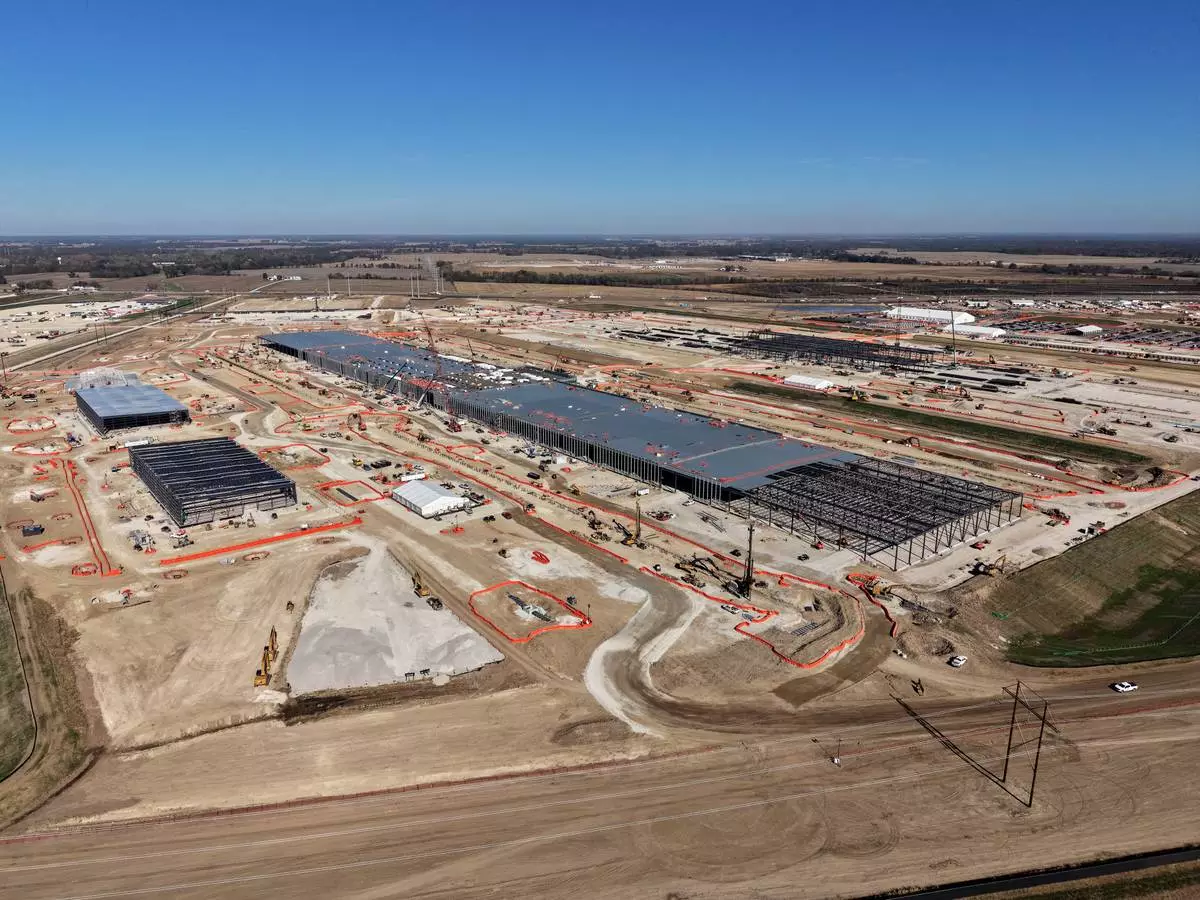
Data centers are critical to the current artificial intelligence boom. They provide the computing power needed to train and run increasingly complex artificial intelligence systems. Reuters made that point directly. A Trump data center tax on overseas construction could therefore complicate the global artificial intelligence buildout, in the words of Reuters.
Reuters reported that developers often locate facilities close to users. That reduces delays for time sensitive tasks such as payment processing. Transmitting large volumes of data over long distances can also add significant costs. A user in Malaysia, Finland, or Brazil will usually get a faster response from a nearby facility than from a facility on another continent.
The Associated Press reported that cloud computing services remain the dominant use of data centers in the United States, according to industry officials, even though artificial intelligence is an important growth factor. That matters because a broad penalty would not only affect artificial intelligence training. It could affect ordinary cloud services, video, search, payments, and business software.
A separate chip rule arrived four days earlier
Trump’s threat did not arrive in isolation. On Monday 16 November 2026, the United States Commerce Department moved to restrict exports of advanced artificial intelligence chips. The restriction applied to several Southeast Asian countries. Reuters reported that move as part of a broader effort to prevent China from obtaining the technology through third countries.
The rule, issued by the Bureau of Industry and Security, required licenses for exports of certain advanced semiconductors to Singapore, Malaysia, Indonesia, Thailand, and Brazil. It also addressed remote access to computing power. The United States already bars direct sales of the most advanced artificial intelligence chips to China. Chinese companies have continued to access them by renting computing capacity abroad, according to Reuters. The chip rule is written. The tax threat is not.
The domestic contradiction Trump did not resolve
Trump wants more data centers in the United States. Many Americans do not want a data center in their community. Trump told communities to welcome construction and to negotiate payments from developers. He said, “You ought to take advantage of the data centers. Make them pay you, make them pay your community, but do not shut them off.”
The Associated Press reported that about three quarters of United States voters in this year’s election said they opposed the construction of a new data center in their community, according to the AP Voter Poll. A survey taken over the summer found that about 6 in 10 Americans said they supported limiting the number of new data centers that can be built. That included most Democrats and Republicans.
USA Today reported a Gallup poll in August found that 7 in 10 Americans do not want data centers in their communities. USA Today also reported that voters weighed in on data centers in referendums in the midterm elections in at least 45 cities and towns. The answer in at least 44 contests was to rein in the industry, according to Data Centers on the Ballot. Those figures come from different polls, so they should not be added together.
The political context is sharp. The Associated Press reported that voter concerns about data centers contributed to a Republican wipeout in the midterm elections, less than three weeks before Trump’s news conference. Democrats won large majorities in both houses of Congress, according to the Associated Press. That creates a second contradiction, because a tax would normally need Congress.

The Senate bill that moved the day before
One day before Trump’s news conference, the Senate approved a bill that deals with the domestic side of the same problem. On Thursday 19 November 2026, the Senate passed the Bipartisan American Affordability and Jobs Act. The vote was 62 to 33. The bill aims to speed up permitting reviews for power plants, transmission lines, and other energy infrastructure. It also aims to make sure data centers pay for the energy they use and for upgrades to the larger transmission network.
The bill now goes to the House of Representatives. Trump praised the Senate bill at the news conference. He said, “It is going to cause tremendous amounts of new building.” That bill is not the same as a tax on overseas data centers. It is a domestic permitting and energy bill, and it is written and voted on in a way that Trump’s tax threat was not.
Can a president impose a Trump data center tax like this on his own
The most important unanswered question is legal. A president cannot normally impose a federal tax by speaking at a news conference. The United States Constitution gives Congress the power to lay and collect taxes. MarketWatch reported that any such tax would be up to Congress. It is unclear what sort of penalty Trump could unilaterally impose on a company.
Trump did not say whether he would ask Congress for a law or issue an executive order. He also did not say whether he would use tariffs, use export controls, or use another tool. Nor did he name a statute. Nor did he name a department that would collect the tax. The tax base also stayed unclear: profits, revenue, or construction costs. Those details determine whether the idea is workable at all.
There is also a practical question about enforcement. How would the government know that a company had built a data center abroad? Would it apply to a data center that is already operating, or only to a new one? Would a company that buys capacity in a foreign data center, rather than building it, be covered? None of those questions were answered in the reports checked.
Trump himself signaled that the idea was new even inside the administration. The Associated Press reported that Trump said he had not yet told his own officials about his plan. Al Jazeera reported that Trump did not provide details on how he would enforce such a policy. That admission is important. The news conference was the first public airing, not the rollout of a finished policy.
What to watch next, and the practical takeaway
If the Trump data center tax ever becomes real policy, the effects would depend entirely on the details that are still missing. A narrow tax on new artificial intelligence training facilities abroad would have one set of effects. A broad tax on all data centers built by American companies outside the United States would have another. A low rate might be absorbed as a cost of doing business. A high rate might change where companies build.
Watch for a written proposal. That could be a bill in Congress, an executive order, a Treasury or Commerce Department rule, or a formal White House statement. Until one of those appears, the story remains a threat, not a policy. Watch for the rate, the definition of a covered company and a covered project, and the date it would take effect.
What the Trump data center tax would need to become real
Do not act as if a tremendous tax now exists. It does not, based on the reports checked. Do not assume it will never exist. A president can return to an idea, ask Congress for a law, or direct an agency to draft a rule. If you run a business that relies on cloud services, ask your provider where your data and workloads are hosted. Also ask whether a change in United States policy could affect price, latency, or availability.
Trump’s message was clear in intent and empty in detail. He wants American companies to build data centers in the United States, not abroad. His aim is for the United States to stay ahead of China in artificial intelligence. He is willing to threaten a Trump data center tax to get there. He has not yet explained how that tax would work, who would pay it, when it would start, or whether Congress would support it. Until those questions are answered in writing, the most accurate description is the one Reuters and the Associated Press used on 20 November: a threat, not a tax.