
Update — 21 Nov 2026: The Claude Riemann Hypothesis proof claim still awaits verification. This is a claimed proof, not an accepted proof. No journal has peer reviewed it, and no body has awarded a prize for it. As of the morning of 21 Nov 2026, the comparator run was still pending at last report, and the Clay Mathematics Institute still lists the Riemann Hypothesis as unsolved. Verification is outstanding.
A mathematician at Anthropic says he has found a proof of the Riemann Hypothesis with help from Claude. Alpoge posted the Claude Riemann Hypothesis proof claim on 20 Nov 2026. No journal or mathematical body has accepted it, peer reviewed it, or awarded a prize for it. The honest headline is narrower than the viral version. Alpoge has made a serious claim in public, with machine checked code behind it, and mathematicians are now checking whether that code proves the statement it is supposed to prove.
The Riemann Hypothesis has resisted proof since 1859. It is one of the seven Millennium Prize Problems the Clay Mathematics Institute named in 2000. Each problem carries a prize of 1 million dollars for a qualifying solution. Only one of the seven, the Poincare Conjecture, had a solution before this week, according to DataCamp. A claim of this size deserves careful language. This post uses claimed language throughout.
Who is behind the Claude Riemann Hypothesis proof claim?
Levent Alpoge is the mathematician behind the claim. He works at Anthropic as a member of technical staff. Princeton University awarded him a PhD in mathematics in 2020, supervised by Manjul Bhargava. From 2021 to 2025, he served as a Junior Fellow in the Harvard Society of Fellows. He is a number theorist, not an outsider to the field. That background does not make the claim correct. It does explain why mathematicians started checking it within hours.
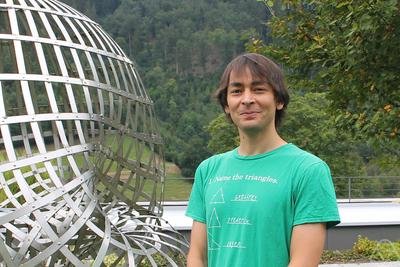
In a four page note on his personal website, Alpoge wrote, in words quoted by Scientific American, “I believe I have, working with Claude, discovered a proof of the Riemann Hypothesis.” He said he believes he has discovered a proof. Outside experts have not verified it, and Alpoge did not say they had. He also said the method resolves the Generalized Riemann Hypothesis, a broader version of the problem. That version extends the same pattern from the Riemann zeta function to a wider family of functions called Dirichlet L functions.
Alpoge did not publish a conventional paper that a reader can follow from start to finish. He released the proof in Lean, a proof assistant that checks mathematical arguments step by step. Science reports that the Lean code runs to 17 million lines. DataCamp and eWeek report that it came in a 14 part archive. Alpoge said a full written argument would be extremely long, and that he had not yet mastered all of the mathematics involved. He planned to write it up properly.
What is the Riemann Hypothesis, in plain terms?
So what is the Riemann Hypothesis, in plain terms? It is a claim about prime numbers, numbers divisible only by themselves and by 1. Examples are 2, 3, 5, 7, and 11. In 1859, Bernhard Riemann proposed that a function now called the Riemann zeta function controls their distribution. That function has points where it equals zero, called zeros. Riemann conjectured that every nontrivial zero lies on one vertical line, where the real part equals one half. Mathematicians call that line the critical line.
If the conjecture is true, prime numbers spread about as evenly as the structure allows. If it is false, a single zero off the line would break it. Xavier Gourdon and Patrick Demichel checked the hypothesis numerically for the first ten trillion nontrivial zeros in 2004. Every one sat on the critical line. That is strong evidence. It is not a proof, because there are infinitely many zeros, and a counterexample could sit far beyond any computed range.
The Generalized Riemann Hypothesis makes the same claim for a whole family of related functions, not only for the zeta function. If it is true, it settles the original hypothesis as a special case. It also settles many other results that mathematicians have proved only on the assumption that it is true. That is why Alpoge claim goes further than a single result. If the broader claim holds, it would unlock a large body of conditional mathematics at once.
AI assisted mathematics in 2026
AI assisted mathematics has moved fast in 2026. On 10 Aug 2026, Anthropic asked an unreleased version of Claude to take a real stab at the hypothesis. It did not prove it. During the attempt, Claude improved a related lower bound, raising the proven share of zeta zeros known to lie on the critical line from 41.6 percent to 67.2 percent. Two Anthropic mathematicians validated that work, and outside experts Brian Conrey and Dan Goldston examined it. Claude also produced a Lean proof of that narrower result.
That August result was real, but it was not a proof of the hypothesis. A lower bound of 67.2 percent is not 100 percent. Anthropic said it did not expect those techniques to lead to a proof. That makes the November claim a sharp change in scale. Science also reports that researchers at OpenAI used an advanced version of ChatGPT to prove the quasi Riemann Hypothesis, ruling out zeros with real part between seven eighths and one. That is a meaningful constraint, not a full proof.
What did Claude contribute to the Claude Riemann Hypothesis proof claim?
What did Claude contribute, according to Alpoge? The note describes a collaboration in which Alpoge directed the effort and Claude supplied major advances. Science quotes Alpoge writing that near the finish line, “Claude flew, and danced, and sparkled near that finish line.” Reporting by eWeek says Claude helped find a workaround involving transformations called theta lifts. The note also says the proof builds on an older technique associated with Sergey Stepanov. The exact route is not yet readable in a conventional paper, so treat those details as reported claims, not verified explanations.
What Lean checked in the Claude Riemann Hypothesis proof claim
Lean is the most misunderstood part of this story. Lean checks whether each step in a formal argument follows from the definitions and earlier steps in the argument. If Lean code compiles without error, that is strong evidence that the internal logic holds. It does not by itself prove that the theorem the code states is the Riemann Hypothesis. A formal proof can compile perfectly and still prove a slightly different statement, if a definition is wrong or the setup hides an assumption.
Mathematicians therefore distinguish three checks. First, does the code compile? Second, does the final theorem in the code really count as the Riemann Hypothesis, with the standard definitions underneath it? Third, can a human understand the argument well enough to judge its ideas and build on them? A compilation alone answers only the first question.
By the afternoon of 20 Nov 2026, the first check had made real progress. Scientific American reported that independent researchers, including Andrew Sutherland at the Massachusetts Institute of Technology, had separately compiled Alpoge result in Lean without issues. Sutherland said, “The Lean proof has been compiled and independently rechecked by the Lean kernel with only the three standard axioms. Honestly the chance that anything is fishy here is approximately zero.” Science reported that Sutherland and Simon DeDeo at Carnegie Mellon University had downloaded the proof and reported that it compiled.
What the comparator run still has to check in the Claude Riemann Hypothesis proof claim
That is encouraging, and it is not the end of verification. Scientific American reported that researchers were still waiting for a successful comparator run for the Claude Riemann Hypothesis proof claim. That run checks that the code does not redefine the meaning of symbols in the statement, and that it compiles with several independent kernels, so it is not exploiting an unknown bug in the official Lean kernel. Kevin Buzzard of Imperial College London put the central question plainly. The first question is what the statement of the theorem in the code is, and whether it corresponds to the actual theorem statement.
Why the timing drew questions
The timing also drew questions. Alpoge said he had consulted Anthropic chief executive Dario Amodei before announcing the result. He acknowledged that people could view its timing cynically, and wrote that the cynical view is false. Nature quotes Andrew Granville, a number theorist at the University of Montreal, saying Alpoge should have taken more time to prepare a clearer write up. Granville called the released document garbled. That does not prove the mathematics is wrong. It does say the presentation made checking harder than it needed to be.
A second claim from the same day
There is a second claim from the same day, and it changes the story. Hours after Alpoge post, Ravi Vakil, president of the American Mathematical Society and a mathematician at Stanford University, posted a draft by Alessandro Masullo that claims a proof of the Generalized Riemann Hypothesis by a human route, with no AI involved. Masullo describes the draft, titled The Music of the Primes, as the product of twelve years of work. Science reports that the manuscript runs to 940 pages, and that Brian Conrad, a Stanford mathematician, had been reviewing it for months.
Vakil said the original plan was to polish the write up, circulate it quietly among experts, and only then announce. Alpoge post made that plan untenable, so Vakil released the current draft as it stood. Conrad confirmed to Scientific American that the details of Vakil post are true. Conrad also said more work is needed, and that the paper is undergoing major revision. Science adds that an earlier attempt by Masullo several years ago had failed to withstand scrutiny, but Conrad says the new proof draws on a substantially different set of methods.
Two claims, two kinds of evidence
The two claims are not the same kind of evidence. Alpoge claim is a formal Lean proof that a computer can check, but that humans cannot yet read. Masullo draft is a human written argument that mathematicians can read, but that no computer has checked and that Masullo is still revising. If both hold, mathematics would have two independent routes to the same result. Should only one hold, the other becomes an important near miss. Should neither hold, the hypothesis remains open.
Neither claim has been peer reviewed
No peer reviewed journal has published either claim. The mathematical community has accepted neither. The Clay Mathematics Institute does not accept direct submissions. Its rules require publication in a qualifying outlet, at least two years to pass after that publication, and general acceptance in the global mathematics community. The prize is 1 million dollars. Reporting on 20 Nov 2026 said the Clay problem page continued to list the hypothesis as unsolved, and a prize decision is years away.
Does a proof break encryption?
Does a proof break encryption? The short answer is no. RSA encryption depends on factoring a huge number that is the product of two large primes. A proof would tighten estimates about how primes are spread out. It would not hand anyone a shortcut to factor a particular key. The real threat to RSA, if it arrives, is a working quantum computer running Shor algorithm, not a proof about the distribution of primes.
Separate the announcement, the compilation, and acceptance of the Claude Riemann Hypothesis proof claim
Separate three different things. First, the announcement: Alpoge posted a note on 20 Nov 2026, and no one disputes that post. Second, the Lean compilation made real progress on 20 Nov 2026, with independent compilation reported by Sutherland and others. Third, mathematical acceptance has not happened. It requires the statement check, the comparator run, a readable argument, independent review, publication, and time. No single download or compilation can replace that process.
Treat 20 Nov 2026 as the day the Claude Riemann Hypothesis proof claim appeared, not as the day anyone solved a 167 year old problem. Follow the verification steps, not the headlines. Look for the comparator run, for the statement check, for a readable write up, and for independent expert review. If those checks pass, this will be one of the largest stories in the history of mathematics. If they do not pass, the hypothesis will remain open, and the field will have learned how to check the next claim faster and better.
That is the right level of excitement. A serious mathematician, working with a powerful AI model, has put a formal proof in public and invited the world to check it. On the same day, a human mathematician has put a long draft in public and invited the same checking. Both invitations are open. The answer is not yet in. The work of finding it has only just begun.