
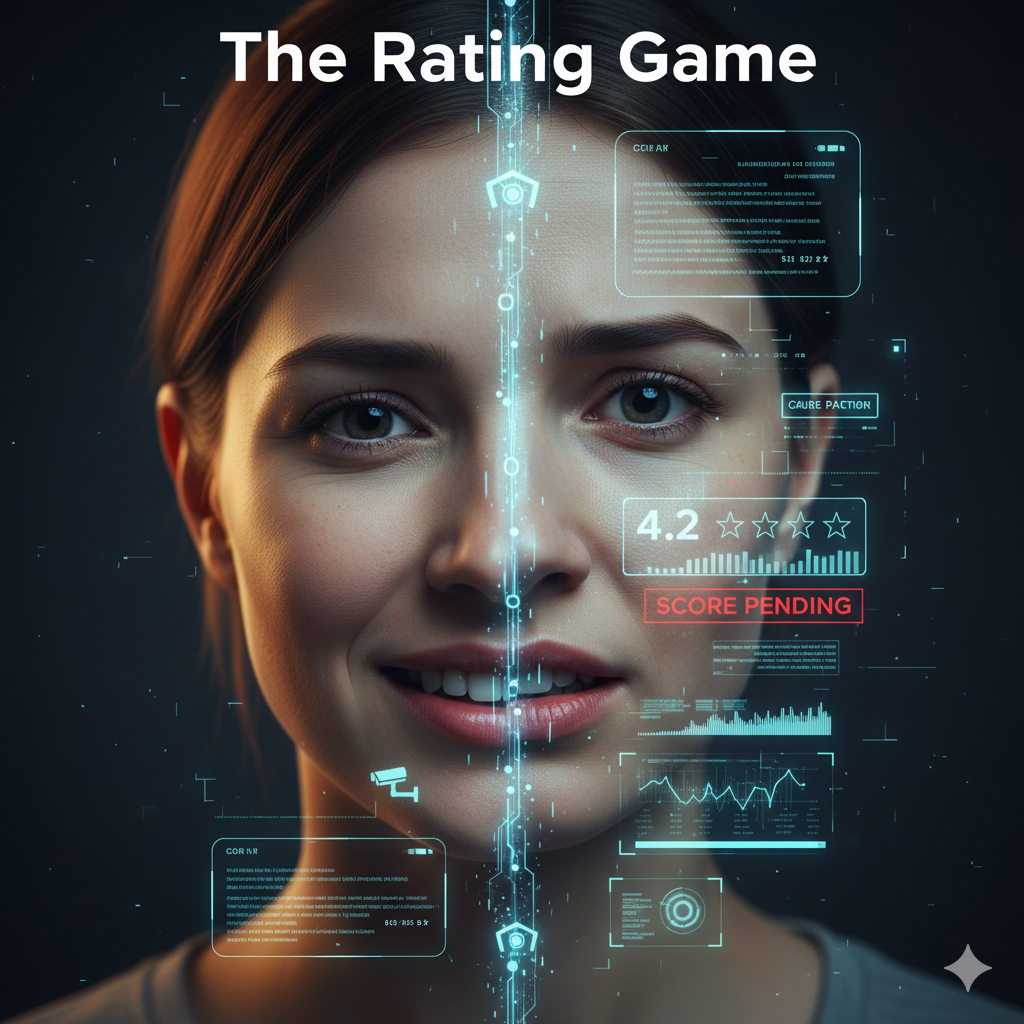

From Netflix to Real Life: The Social Credit Revolution
Remember that Black Mirror episode “Nosedive” where everyone obsessively rates each other, and your score controls your entire life? Yeah, that’s not fiction anymore. China’s been running a real-world version since 2014, and the UK is quietly building similar infrastructure. Let’s talk about what’s actually happening—and why you should care.
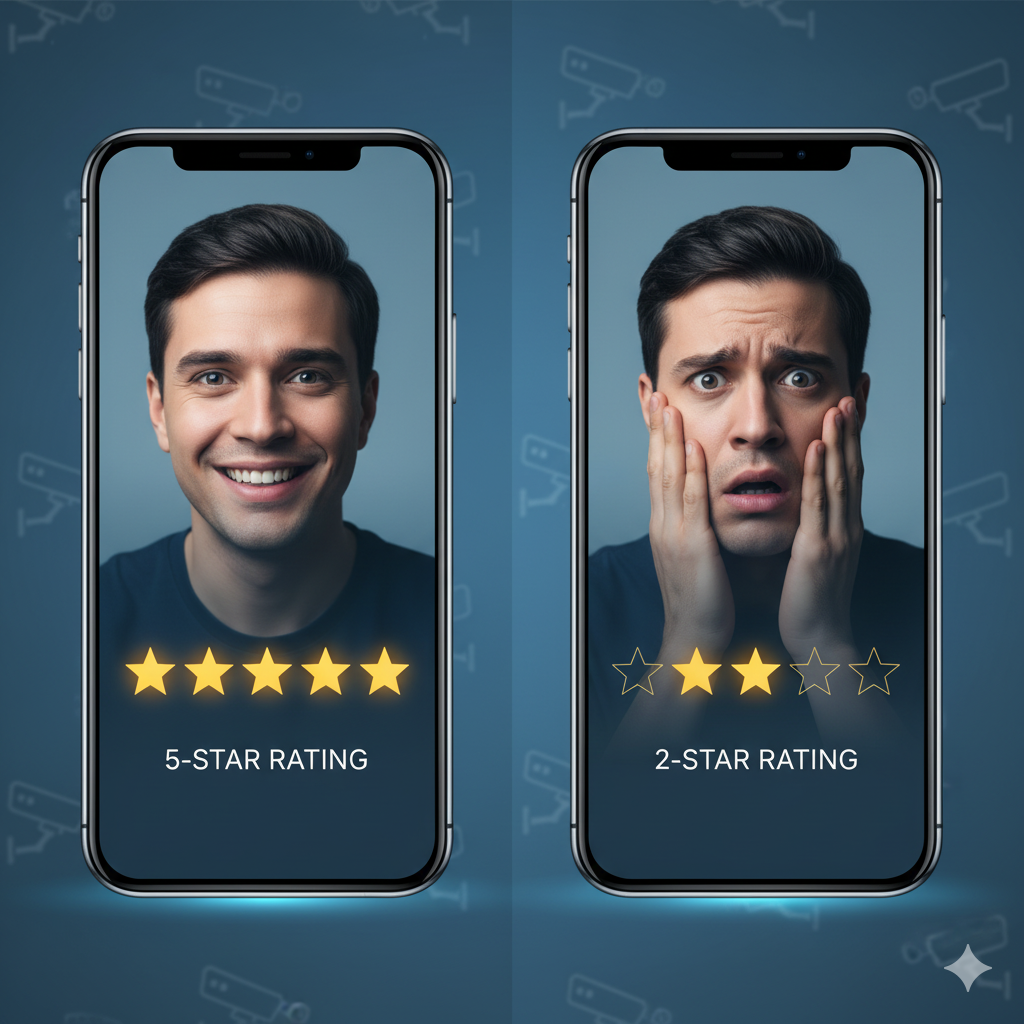
China’s System: The Reality Behind the Headlines
Here’s the deal with China’s social credit system: it’s basically a giant behavior report card for 1.4 billion people. Do good stuff (pay bills on time, volunteer, donate blood), your score goes up. Do bad stuff (jaywalk, speak out against the government, post “fake news” online), your score drops.
The consequences are very real:
- 17.5 million people blocked from buying plane tickets (as of 2019)
- 5.5 million people banned from high-speed trains
- 23 million individuals and companies on various blacklists by 2020
One Chinese journalist, Liu Hu, couldn’t buy property or travel because of his “low score”—his crime? Writing articles the government didn’t like. No trial, no judge, just suddenly locked out of normal life.
Sound familiar? That’s exactly what happened to Lacie in “Nosedive” when her rating tanked.
Learn more about China’s system at Council on Foreign Relations
The UK’s Version: It’s Not Called “Social Credit” (But Maybe It Should Be)
Britain hasn’t announced a “social credit system,” but let’s look at what’s already happening:
The Infrastructure:
- 5.2 million CCTV cameras (one for every 13 people—Europe’s highest)
- 50+ million license plates scanned daily by automated cameras
- Facial recognition trials running in major cities
- Digital ID systems being rolled out across government services
The Behavior Tracking:
- London’s ULEZ system automatically charges older cars—sounds environmental, but it’s also perfect infrastructure for tracking where you go and penalizing “wrong” behavior
- Universal Credit recipients must prove job-searching activity online or lose benefits
- Insurance companies track your driving with telematics—brake too hard, pay more
- Banks use algorithms that judge not just your credit history but your social media and shopping habits
None of these are officially “social credit,” but stack them together? You’ve got the building blocks.

Privacy International has more on UK surveillance concerns
Black Mirror Got It Right: Fiction vs. Reality
| “Nosedive” (2016) | Real Life (2025) |
|---|---|
| People rate each other on apps | Chinese citizens report neighbors; scores affect everyone |
| Low ratings = no fancy apartments | Low scores = no flights, no good schools for your kids |
| Your rating is public | Chinese blacklists are published online for all to see |
| One bad day tanks everything | One “wrong” social media post can destroy your score |
| Forced fake smiles to maintain scores | Chinese citizens self-censor constantly to stay safe |
The scary part? Charlie Brooker wrote “Nosedive” as a warning about Instagram culture. He didn’t expect governments to actually build it.
The Good Side (Yes, There Is One)
Look, these systems exist because they solve real problems:
- Fraud drops dramatically when everyone knows they’re being watched
- People behave better (at least on the surface) when there are actual consequences
- Government services get faster for “trusted” citizens
- In some Chinese cities, counterfeit goods decreased significantly
The question is: are these benefits worth the cost?
The Dark Side (It’s Pretty Dark)
Your Privacy? Gone.
Every purchase, every post, every place you go becomes data. China has roughly one surveillance camera for every 2.3 people. The UK isn’t far behind. When everything you do feeds into a score, privacy isn’t a right anymore—it’s a luxury.

The Algorithms Are Biased
Algorithms learn from data, and data reflects human bias. Studies consistently show facial recognition works worse on darker skin. Predictive systems over-police certain neighborhoods. A social credit system would bake these biases into one powerful, life-changing number.
Goodbye, Free Speech
When saying the wrong thing tanks your score, people stop saying it—even if they believe it. That’s exactly the point. Chinese journalists now self-censor before posting anything remotely controversial. Why risk your ability to travel or get a loan?
Read more from Amnesty International on human rights concerns
The Psychological Damage: Living Inside the Score

Here’s what happens when you live in a scored society:
Constant Anxiety: Research shows 34% of Chinese social credit participants report increased daily anxiety. You’re always wondering: “Will this hurt my score?”
Fake Relationships: When your friend’s low score could hurt yours, friendships become strategic, not genuine. People in Rongcheng (a pilot city) admitted avoiding friends with bad scores.
Learned Helplessness: A man in China couldn’t visit his dying father because a decade-old fine kept him off trains. He tried to pay it immediately—didn’t matter. The system said no. When you can’t fix your score no matter what you do, you give up trying.
Lost Identity: Young people stop exploring who they are because experimenting might lower their score. Safe conformity beats risky authenticity every time.
In the UK, 42% of workers already report that workplace surveillance causes stress. Now imagine that extending to your entire life.
What Makes This Different from Credit Scores?
Good question. Credit scores judge your ability to repay loans—specific, transparent, limited. Social credit judges everything you do and affects every part of your life.
Credit scores have clear rules and dispute processes. Social credit algorithms? Often completely opaque. You might not even know why your score dropped.
The Slippery Slope: How We Got Here
Here’s the timeline that should worry you:
- 2016: “Nosedive” airs as cautionary fiction
- 2014-2020: China builds nationwide infrastructure
- 2020-2025: UK quietly expands digital monitoring
- Today: The gap between fiction and reality is razor-thin
The UK didn’t wake up one day and decide to become a surveillance state. It happened gradually: a camera here for safety, a tracking system there for efficiency, a digital ID for convenience. Each piece seemed reasonable alone. Together? They create something much more powerful.
In Rongcheng, residents initially hated the social credit system. Three years later, 80% approved. That’s not because the system got better—it’s because people got used to it. Psychologists call this “surveillance fatigue.”
Electronic Frontier Foundation tracks these developments
Can We Find a Better Way?
Yes, but it requires intention. Instead of algorithmic behavior control, we could:
- Invest in education and community programs that build real social connection
- Use targeted, transparent systems with clear rules and appeals processes
- Deploy privacy-preserving technologies that prevent fraud without comprehensive surveillance
- Maintain strong democratic oversight with sunset clauses requiring regular reauthorization
The tech exists to solve problems without becoming Big Brother. We just have to choose to use it that way.

The Bottom Line: Your Move
Social credit systems are here. China’s proven they work (if “work” means “control behavior,” not “make people happy”). The UK has the infrastructure to implement something similar—the only question is whether it will?
The numbers don’t lie:
- 23 million people blacklisted in China
- 5.2 million cameras watching Britain
- 815+ million pounds invested in UK surveillance since 2015
This isn’t a distant dystopia—it’s Monday morning.
Black Mirror showed us what happens when everyone performs for ratings: authenticity dies, anxiety skyrockets, and human connection withers. The show’s dark twist was that we were already doing it voluntarily on social media. The darker twist? Governments saw it and thought, “Let’s make it mandatory.”
Charlie Brooker’s warning is becoming our reality. The question is whether we’ll notice before it’s too late.
What kind of society do we want technology to build? One that manages people like inventory, or one that empowers them to thrive? The answer will determine whether we’re heading toward a freer future or just a real-life episode of Black Mirror—except this time, there’s no turning it off.
Stay Informed:
- Big Brother Watch (UK): bigbrotherwatch.org.uk
- ACLU on Surveillance: aclu.org
- MIT Technology Review: technologyreview.com
Keywords: social credit system, China social credit, UK surveillance, Black Mirror Nosedive, digital privacy, mass surveillance, facial recognition UK, algorithmic bias, surveillance state, digital rights, psychological impact surveillance