

What If Death Wasn’t the End?
Picture this: You close your eyes for what seems like a moment. When you open them again, it’s 200 years in the future. Your disease? Cured decades ago. Your youth? Restored by medical tech we can barely imagine today.

Sounds like science fiction, right? Well, companies like Tomorrow Bio, Alcor, and the Cryonics Institute are making this option real. For between $28,000 and $200,000, you can have your body frozen after death, betting that future scientists will figure out how to bring you back.
But here’s the million-dollar question everyone’s asking: Are we challenging nature itself? Is this brilliant medical progress, or have we finally gone too far?
Let’s dig in, because this rabbit hole goes deep.
“You’re Doing WHAT with Dead Bodies?”
The Pushback is Real
The most common reaction to cryonics? “That’s… unnatural.” And honestly, people have been saying that about medical breakthroughs for centuries.
Back in the 1600s, when doctors first tried blood transfusions, critics called it an abomination. When anesthesia was invented, some religious leaders argued that pain during childbirth was God’s plan and shouldn’t be messed with. Now? Both are standard medical practice.

But cryonics feels different. We’re not treating a sick person. We’re trying to pause death itself—the one thing every living creature eventually faces.
The “Playing God” Problem
Here’s where things get philosophical. Some argue that attempting to defeat death shows massive human arrogance. The ancient Greek philosophers would call it “hubris”—the dangerous pride that makes you think you can outsmart fundamental laws.
Think about it: Death gives life meaning. If you knew you’d live forever, would today matter as much? Would you treasure your relationships the same way? Would you chase your dreams with the same urgency?
Critics say removing death’s finality might rob life of its profound meaning.
What Do Religious Leaders Think?
Religious perspectives are all over the map. Catholic thinkers have expressed concerns that cryonics represents trying to retrieve the soul after it’s moved on—essentially pulling someone back from heaven or hell.
Islamic scholars point out that in their faith, only God brings people back to life. Trying to do it ourselves? That’s overstepping in a big way.

But surprisingly, not all religious folks are against it. Some Christian thinkers argue that if medicine’s advancement is part of God’s plan, then cryonics could be too—allowing people more time to do good work on Earth.
Wait a Second… Haven’t We ALWAYS “Challenged Nature”?
Reframing the Whole Question
Here’s where cryonics supporters make a really interesting point: We’ve been “challenging nature” since humans first discovered fire.
Think about what’s “natural”:
- Living until about 30 years old
- Dying from infections that antibiotics now cure instantly
- Watching half your kids die before age five
- Succumbing to diseases we now prevent with simple vaccines
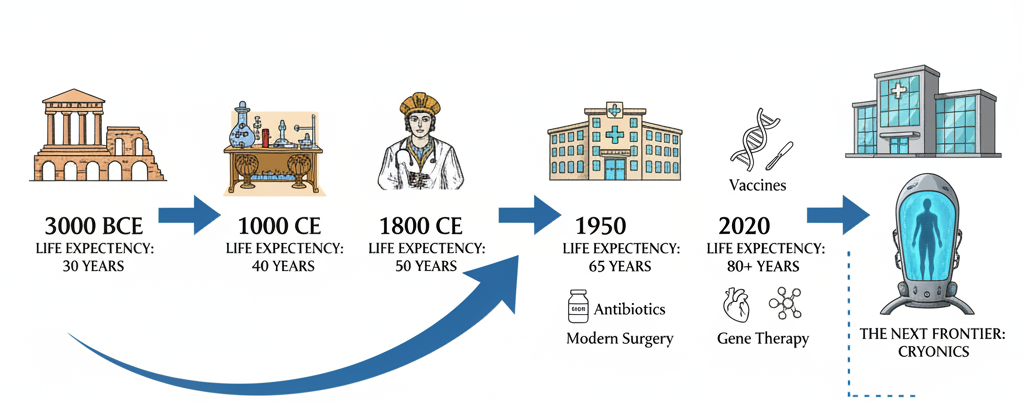
None of the modern medical world is “natural” in the sense that it requires zero human intervention. Yet nobody today argues against antibiotics or surgery because they’re “unnatural.”
Death Isn’t What It Used to Be
Here’s something wild: What counts as “dead” has changed dramatically over time.
In biblical times, if your heart stopped, you were dead. Period. Then we invented CPR. Suddenly, heart-stopped didn’t mean permanently dead.
Stop breathing? That used to be death too—until mechanical ventilators came along.
Even “brain death” isn’t as final as we once thought. We’ve seen cases where people declared brain dead later recovered.
Cryonics advocates argue they’re just extending this trend. They say they’re not bringing dead people back to life—they’re preserving people who future doctors might not even consider dead.
The IVF Comparison That Changes Everything
Remember when in vitro fertilization (IVF) was new? People lost their minds. The objections sound eerily familiar:
- “It’s unnatural!”
- “You’re playing God!”
- “It’s disgusting!”
- “We don’t know what could go wrong!”
- “Only rich people can afford it!”
Those exact arguments were made in the 1970s. Now? Millions of people owe their existence to IVF, and it’s considered completely normal.
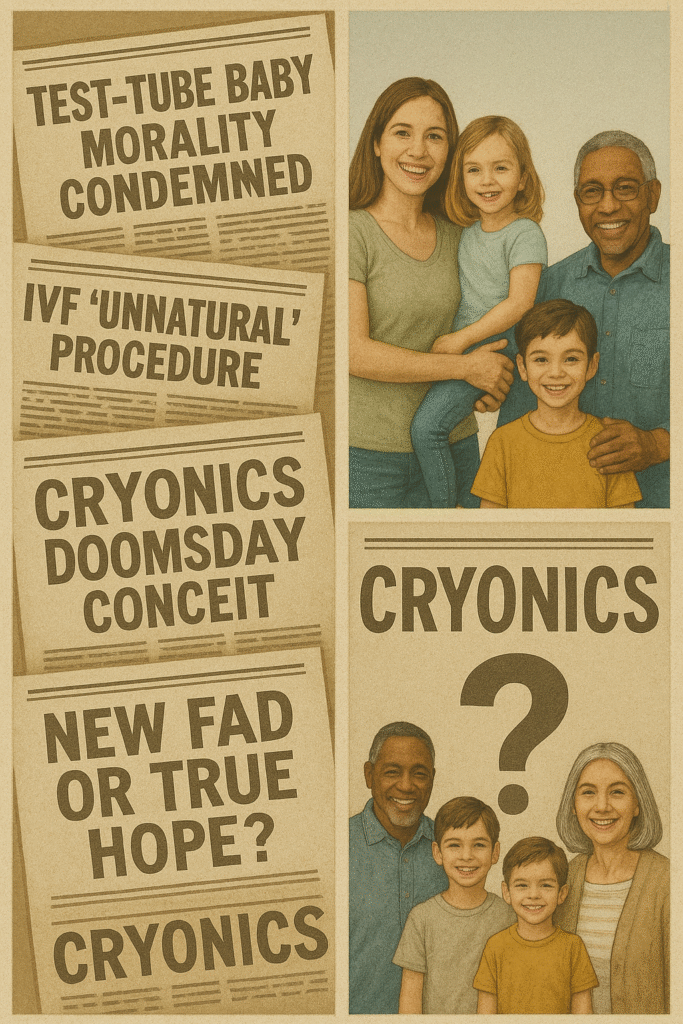
Could cryonics follow the same path?
The Science: How Do You Actually Freeze a Person?
The Ice Crystal Problem
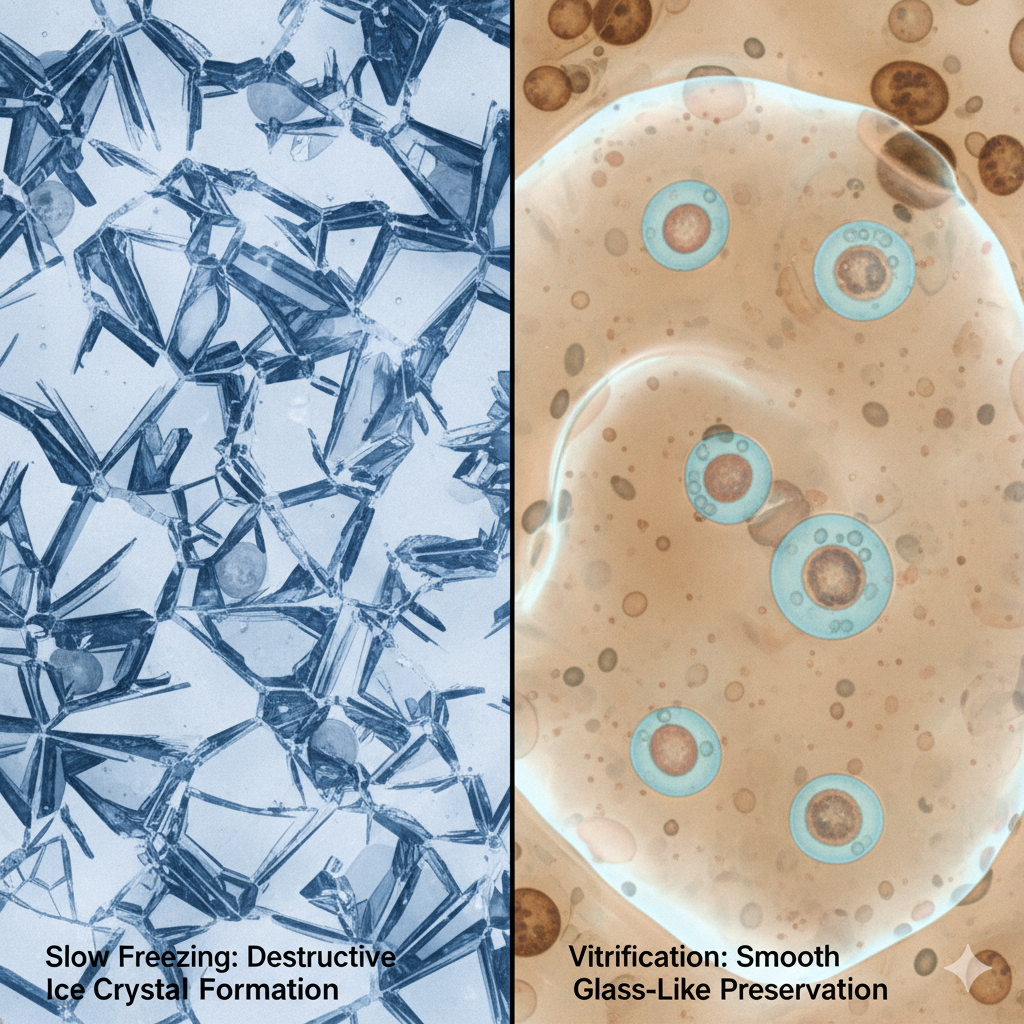
Here’s why you can’t just throw a body in a freezer: When water freezes, it expands and forms sharp ice crystals. Those crystals shred your cells like tiny knives.
Ever frozen a strawberry and watched it turn to mush when thawed? Same problem, but with your brain. Not ideal.
Enter: Vitrification (The Cool Science Part)
This is where it gets interesting. “Vitrification” comes from the Latin word for glass. Instead of freezing, scientists turn your body into a glass-like state.
Here’s the step-by-step:
| The Race Against Time | The Blood Swap | The Big Chill | The Long Sleep |
| The moment you’re legally declared dead, a specialized team springs into action. Every second counts. They cool your body and keep blood circulating to protect your brain. | Your blood gets replaced with special “antifreeze” chemicals—compounds with names like dimethyl sulfoxide and ethylene glycol. These dramatically lower water’s freezing point, preventing those deadly ice crystals. | You’re rapidly cooled to -130°C. At this temperature, your body doesn’t freeze—it vitrifies, turning into a stable, glass-like state where all molecular movement basically stops. | Finally, you’re slowly brought down to -196°C and stored in liquid nitrogen. At this temperature, biological processes completely cease. You could theoretically stay this way indefinitely. |
The Brutal Truth About Revival
Here’s the part nobody likes talking about: Nobody has ever been successfully revived from cryopreservation. Ever.
Scientists have successfully vitrified and thawed small tissue samples—including rabbit brains and human brain tissue. That’s promising! But whole human bodies? That’s still science fiction.
The challenges are enormous. Large organs can develop fractures from thermal stress. Some cellular damage happens from the chemicals themselves. And we have zero idea if preserved brains retain enough structure to actually reconstruct someone’s memories and personality.
But cryonics fans say: “As long as the brain’s basic wiring is intact, maybe future nanotech can repair the damage.”
The Price Tag: What Does Immortality Cost?
Breaking Down the Numbers
Let’s talk money. Here’s what the major players charge:
- Tomorrow Bio: $200,000 (full body) / $80,000 (brain only)
- Alcor: $220,000 (full body) / $80,000 (brain only)
- Cryonics Institute: $28,000-$35,000 (full body only)
- KrioRus (Russia): $36,000 (full body) / $18,000 (brain only)
The Mind-Bending Identity Question
Would It Really Be “You”?
Even if the technology works perfectly, here’s a brain-melter: Would the person who wakes up actually be you?
It’s an ancient philosophy problem called the Ship of Theseus. If you replace every plank in a ship over time, is it still the same ship?

Applied to cryonics: If every cell in your body is repaired or replaced during revival, are you still you?
Neuroscientists argue yes—as long as your brain’s wiring pattern is preserved. Your identity, memories, and personality exist in how your 86 billion neurons connect. Preserve that pattern, preserve “you.”
But that assumes consciousness “emerges” from these patterns in ways we don’t fully understand. And that’s a big assumption.
Waking Up Alone
Here’s the emotional gut-punch: What if you wake up and everyone you knew is gone?
One father worried about his daughter preserved at 14: “She might wake up 200 years later with no relatives, unable to remember things, in a desperate situation.”
Imagine: You’re not just waking up in a different time. Potentially a different millennium. The language, culture, technology, social norms—everything is alien. You’re a living fossil. How do you even begin to fit in?
The Dark Side: When Cryonics Goes Wrong
The Tragic Failures
In the 1960s and 1970s, several cryonics organizations went bankrupt. Their preserved patients? Thawed and disposed of.
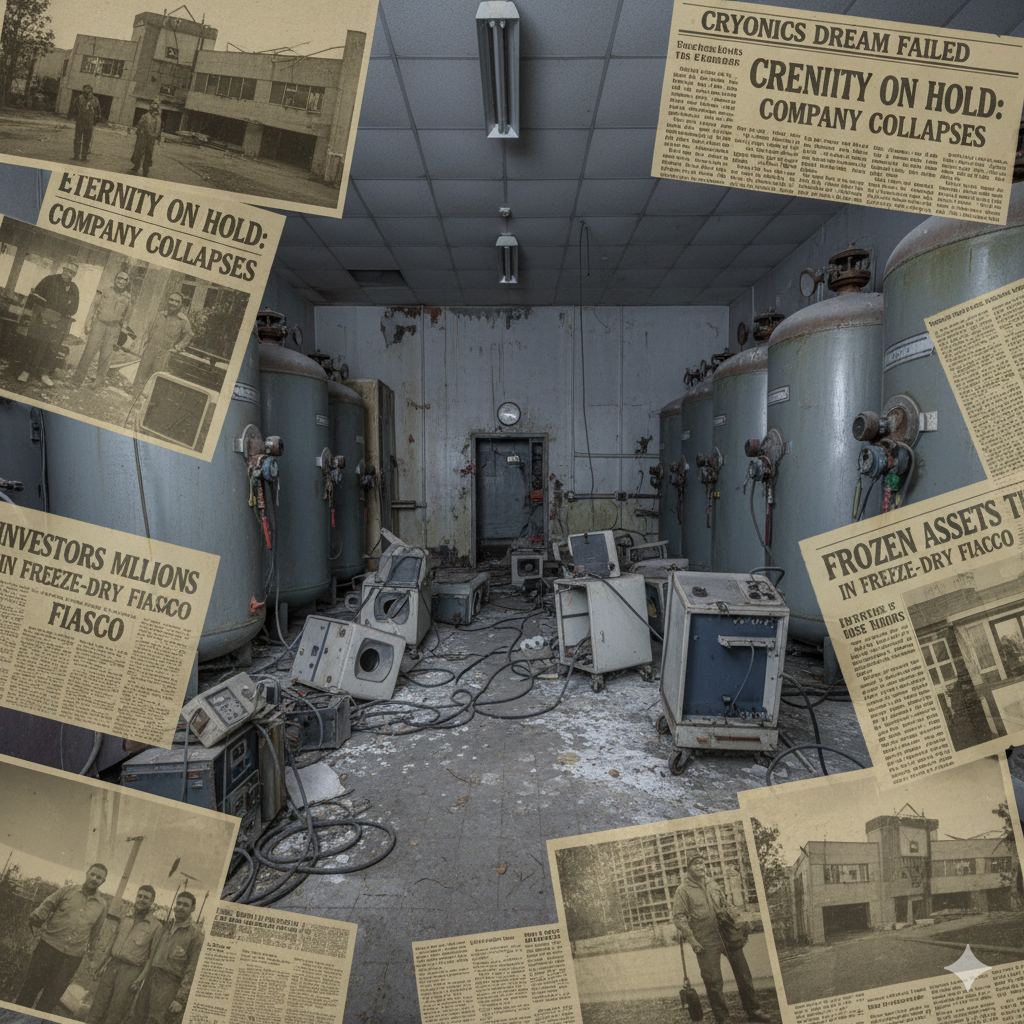
The Cryonics Society of California famously collapsed, leading to the “Chatsworth scandal” where nine bodies were found thawed in horrible conditions. For families who’d paid substantial sums expecting a second chance for their loved ones, this was heartbreaking betrayal.
Very few companies survive beyond 100 years. How do we guarantee cryonics organizations will last for centuries or millennia?
The Timing Dilemma
Here’s an ethical minefield: The sooner preservation begins, the better your chances. But current laws require legal death first.This creates a perverse incentive. Some patients have requested early preservation, essentially asking for assisted death to maximize their revival chances.
Where’s the line between medical care, end-of-life decisions, and optimizing cryonic preservation? Nobody knows.
The Bottom Line: A Mirror to Our Values
What Cryonics Really Reveals
Ultimately, cryonics isn’t just about challenging nature—it’s about challenging ourselves to define what we value.
Do we value: Individual choice or collective good? Life extension or natural mortality? Technological optimism or humility about our limits? Present needs or future possibilities?

As MIT Technology Review noted, “Cryonics deserves open-minded discussion,” along with broader questions about consciousness, life-saving transplants, and where we draw the line between biological life and death.
The Questions We’re Really Asking
Cryonics forces us to grapple with:
- What gives life meaning?
- How do we balance individual freedom with societal impact?
- What do we owe future generations?
- How far should medicine go in extending life?
- At what point does life extension become something else entirely?
A Technology That Challenges Everything
Maybe cryonics challenges more than just nature—it challenges our understanding of what it means to be human in a technological age.
Whether it represents humanity’s noblest dream or most dangerous delusion probably depends on your deepest beliefs about nature, technology, mortality, and meaning.
What’s certain: Around 500 people are already frozen, with 4,000 more on waiting lists. The technology keeps improving. The conversation is happening whether we’re ready or not.
The future of cryonics—and perhaps humanity—depends on how we collectively answer these questions.
Your Turn: What Do You Think?
This isn’t just a philosophical exercise. Real people are making real decisions right now. Companies like Tomorrow Bio, Alcor, and Cryonics Institute are actively preserving people who hope for a second chance.
Questions to consider:
- Is cryonics legitimate medical technology or modern snake oil?
- Would you consider cryopreservation for yourself or someone you love?
- How do we balance individual choice with societal impact?
- Should governments regulate this technology, and if so, how?
- What role should religious and philosophical perspectives play?
The debate is just beginning. And your voice matters.
What’s your take? Drop your thoughts in the comments below.
Want to dive deeper? Check out: