
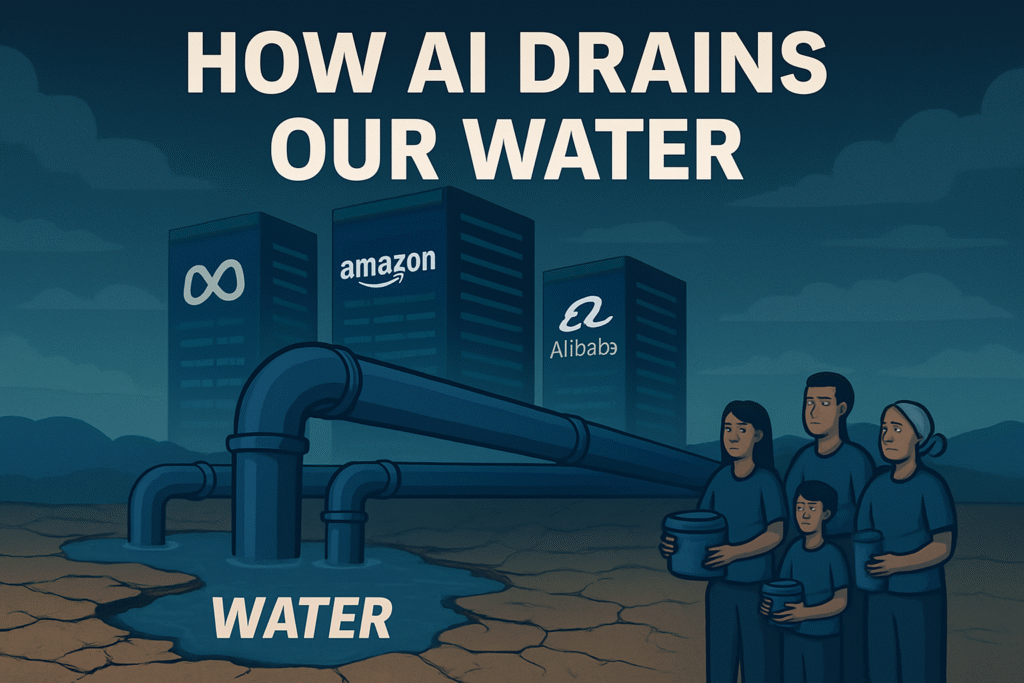

Introduction: The Invisible Cost of Your ChatGPT Query
Every time you ask ChatGPT a question or scroll through your Facebook feed, you’re participating in an environmental crisis that most people don’t even know exists. Behind the seamless digital experience lies a network of massive data centers consuming water at rates that rival entire cities—and rural communities across America are paying the price.
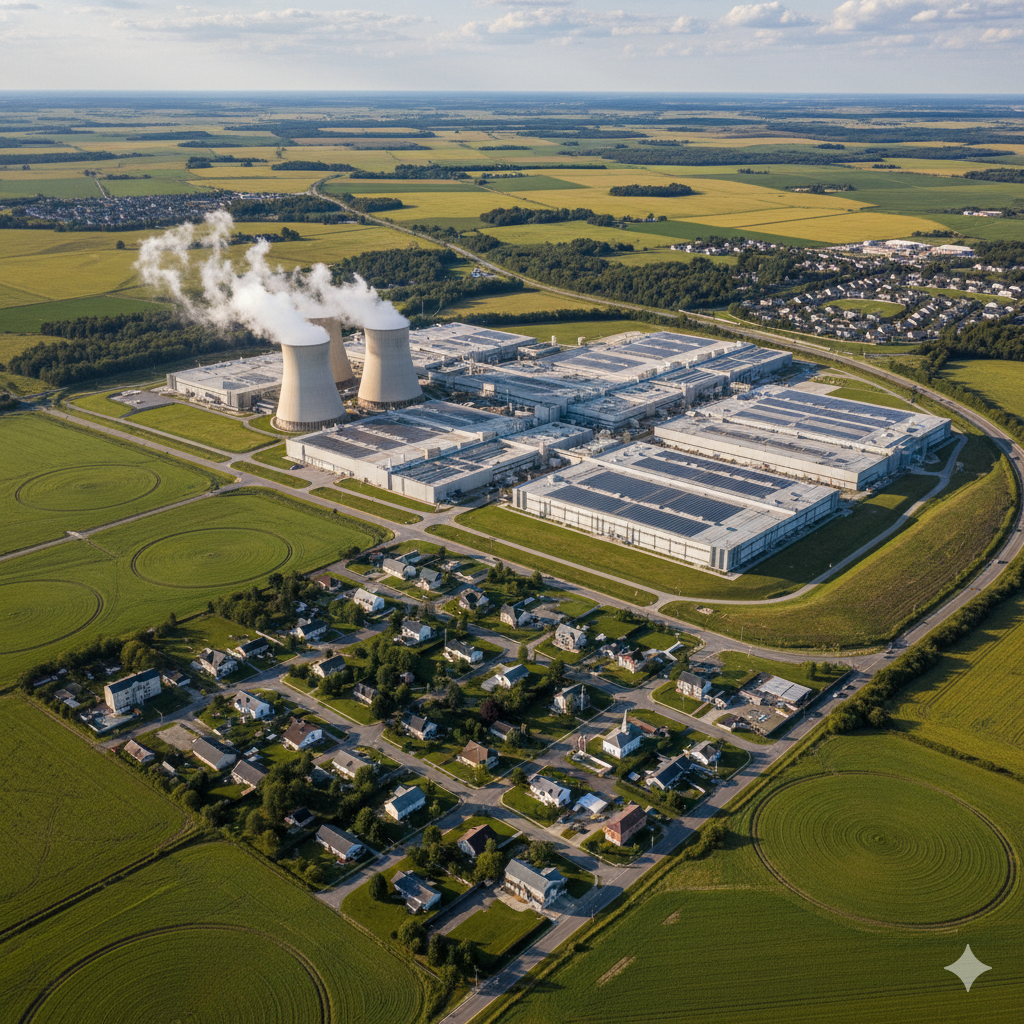
The AI revolution promised to transform our lives, but what’s the real cost? As artificial intelligence becomes woven into our daily routines, the infrastructure supporting it is creating unprecedented strain on local water supplies, electricity grids, and the quality of life for thousands of Americans living in the shadows of these technological behemoths.
The Shocking Scale of Data Center Water Consumption and Usage
The numbers are staggering, yet they remain largely hidden from public view. In 2023 alone, U.S. data centers consumed 17 billion gallons of water directly through cooling systems. However, experts warn that these figures could double or even quadruple by 2028 as AI adoption accelerates. What’s even more alarming is that indirect water consumption from electricity use was estimated at 12 times greater than direct cooling use in the same year.
To put this in perspective, a medium-sized data center can consume up to 110 million gallons of water annually—equivalent to the water needs of approximately 1,000 households. Yet these facilities often employ fewer than 30 people, making their environmental footprint disproportionately massive compared to their economic contribution to local communities.
Tech Giants’ Water Footprints: The Numbers Don’t Lie
When we examine individual companies, the water consumption becomes even more alarming:
Meta’s Water Usage: In 2023, Meta consumed 813 million gallons of water globally, with 95% of that amount—776 million gallons—dedicated to data center operations. This represents the water needs of thousands of families being diverted to keep servers cool and AI models running.
Google’s Expanding Thirst: Google’s operations consumed a whopping 6.4 billion gallons of water in 2023, with data centers accounting for 95% of that total at 6.1 billion gallons. Their facility in Council Bluffs, Iowa, alone consumed 1 billion gallons of water in 2024—enough to supply all of Iowa’s residential water needs for five days.
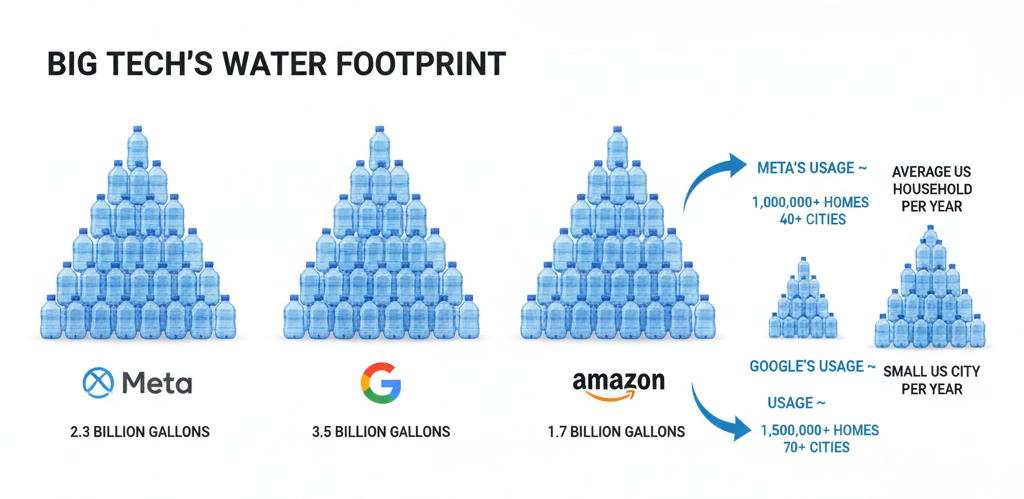
Amazon’s Hidden Numbers: Perhaps most troubling is the lack of transparency from some tech giants. A leaked 2022 Amazon memo revealed that the company used 105 billion gallons of water in 2021—equivalent to 958,000 U.S. households. Yet in their public Water Positive campaign, they disclosed only 7.7 billion gallons per year. Amazon continues to release annual sustainability reports but doesn’t fully disclose the company’s actual water usage, raising serious questions about corporate accountability.
The AI Factor: How ChatGPT Water Usage Adds Up
The rise of artificial intelligence has exponentially increased water consumption in ways most users never consider. Each time you interact with an AI chatbot, you’re triggering a complex computational process that requires significant cooling infrastructure.
GPT-3, one of the foundational AI models, consumes an estimated 500ml of water per 10-50 responses. While this might seem minimal for an individual interaction, multiply this across billions of users making millions of queries daily, and the water footprint becomes astronomical. As AI tools become integrated into smartphones, search engines, social media platforms, and business operations, the cumulative water demand continues to surge.
This creates a profound ethical dilemma: Should everyday consumers bear the environmental burden of technological conveniences they barely understand? More importantly, should rural communities sacrifice their water security so urban tech users can enjoy faster AI responses?
Georgia: Ground Zero for the Data Center Water Crisis Boom
While Silicon Valley gets the spotlight, rural Georgia has quietly become the epicenter of America’s data center explosion—and the human cost is becoming impossible to ignore. The state’s combination of cheap electricity rates (40% below the national average for industrial use), massive tax breaks for data center operators, and available land has made it the fastest-growing data center location in the country.
However, this growth comes with devastating consequences for local residents who never asked to subsidize Big Tech’s infrastructure.
The Mansfield Story: When Big Tech Moves In
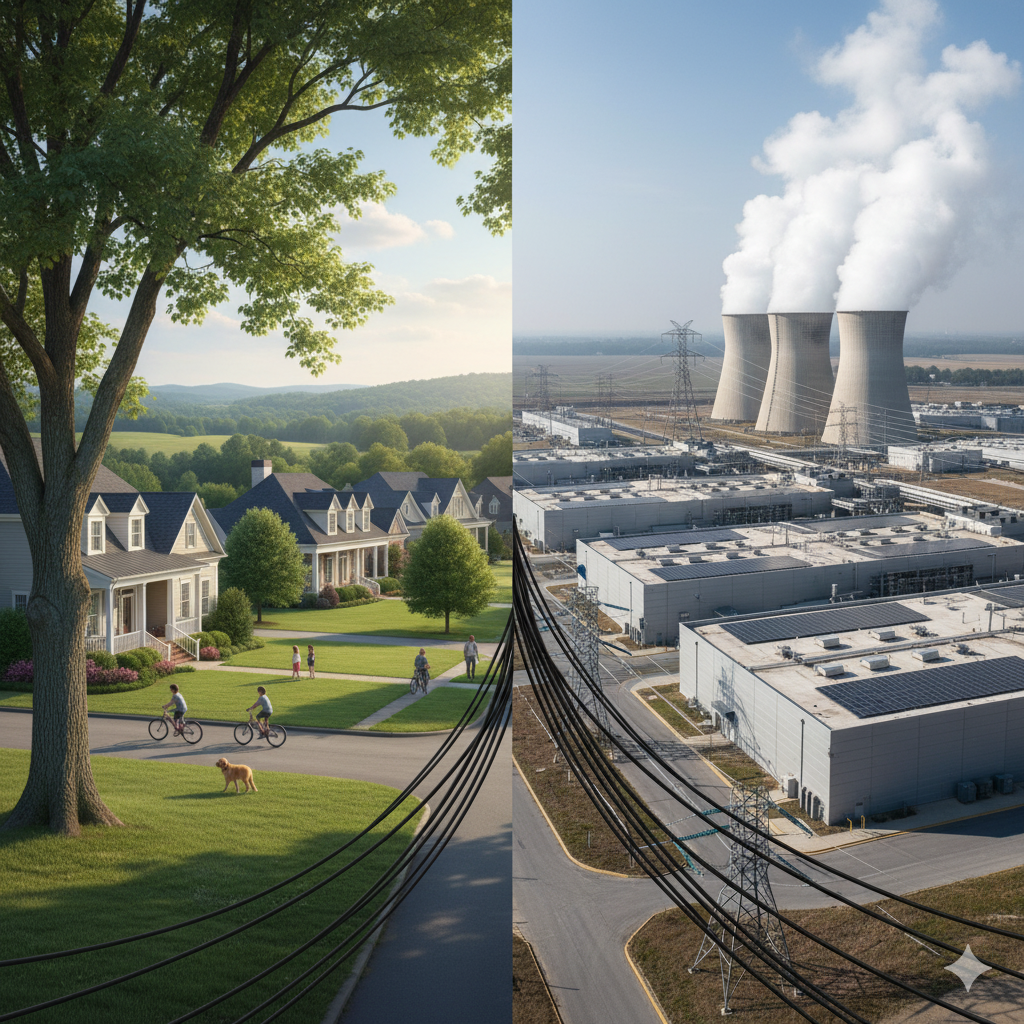
The small town of Mansfield, Georgia, offers a stark illustration of what happens when mega data centers arrive in quiet rural communities. Beverly and Jeff Morris bought their dream home in Mansfield in 2016, seeking a peaceful countryside escape from urban life. What they got instead was a front-row seat to the environmental and social disruption caused by Meta’s 50-acre data center.
The impact was immediate and severe. Energy consumption in the area spiked by 34 percent, placing unprecedented strain on the local power grid. Water usage soared by 200 million gallons per year, and the consequences rippled through the community. Nearby residents reported their wells running dry for the first time in generations as Meta’s facility diverted groundwater resources.
The Morris family’s experience mirrors that of countless others living near data centers: water contamination concerns, environmental degradation, steadily increasing energy bills, and the loss of the rural tranquility they had sought when moving to the area.
The Hidden Costs: Noise, Pollution, and Broken Promises
Beyond water consumption, data centers bring a host of quality-of-life issues that rarely make it into promotional materials about job creation and economic development.
Noise Pollution: Residents consistently report loud disruptions during the construction phase, followed by a constant, low-frequency hum from cooling systems and backup generators once facilities become operational. This persistent noise has caused documented cases of sleep disturbances, elevated heart issues, and chronic anxiety among nearby residents. Imagine trying to enjoy your backyard or sleep with your windows open, only to be met with industrial-level noise that never stops.
Rising Electricity Bills: Georgia Power executives have acknowledged that 80% of the company’s projected increased energy demands over the next decade are tied to prospective data centers opening in the state. A June 2025 study from Carnegie Mellon University and North Carolina State University found that data center growth could increase electricity bills by 8% nationally and as much as 25% in some regional markets. In other words, residential customers are subsidizing Big Tech’s energy consumption through higher rates.
Economic Mirage: The promised economic benefits often fail to materialize. The average data center employs around 30 people—fewer than a typical McDonald’s restaurant, which employs approximately 50 people. Meanwhile, tax exemptions for two data center programs in Georgia are estimated to cost $296 million in 2025 alone. These are public funds that could have supported schools, infrastructure, or healthcare—instead redirected to some of the world’s wealthiest corporations.
Data Center Cooling Costs: Why Facilities Consume So Much Water
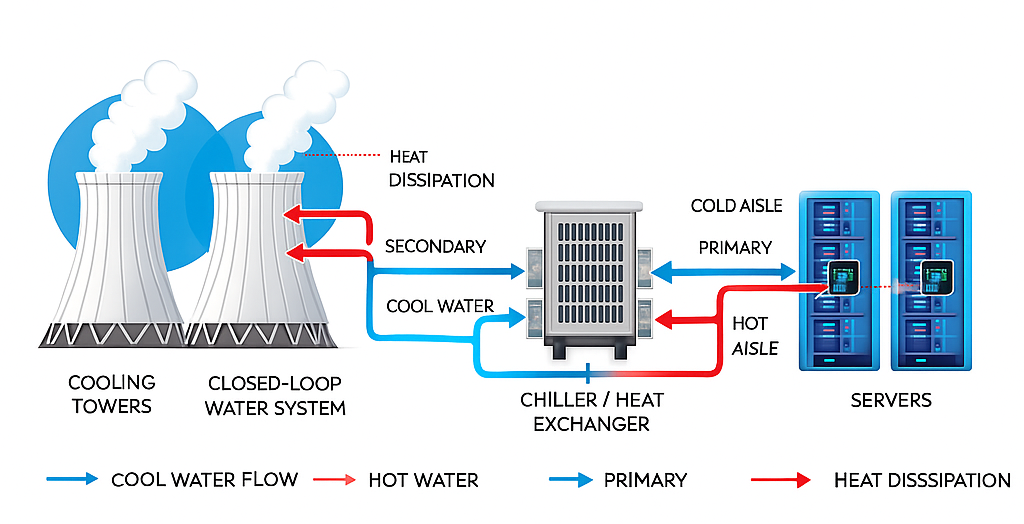
Understanding why data centers consume such massive amounts of water requires a look at the technology itself. Modern data centers house thousands of servers running continuously, generating tremendous heat. Without proper cooling, these servers would overheat and fail within minutes.
Up to 43% of data center electricity consumption in the U.S. is dedicated to cooling systems. This cooling happens in two primary ways:
Direct Water Cooling: Water is pumped through pipes around computer equipment, absorbing heat before being cooled and recirculated. This direct method alone accounts for billions of gallons annually.
Indirect Water Consumption: The electricity powering these facilities must be generated somewhere, and power plants require water for operations. Fossil fuel power plants require dramatically more water than renewable sources like solar or wind, meaning data centers relying on traditional grids have an even larger hidden water footprint.
Water Scarcity: Building Data Centers with High Water Consumption in Drought Zones
One of the most troubling aspects of the data center boom is the location choices made by tech companies. In 2021, one of every five data centers was located in areas already experiencing water stress, with many clustered around Dallas, Phoenix, Reno, and the San Francisco Bay area—regions where water scarcity is already a critical issue.
Microsoft acknowledged in 2023 that 42% of its water usage came from areas with existing water stress. Google’s data showed that 15% of its water usage came from places with high water scarcity. These aren’t accidental oversights—they’re deliberate business decisions prioritizing factors like tax incentives, electricity costs, and proximity to fiber optic networks over environmental sustainability and community welfare.
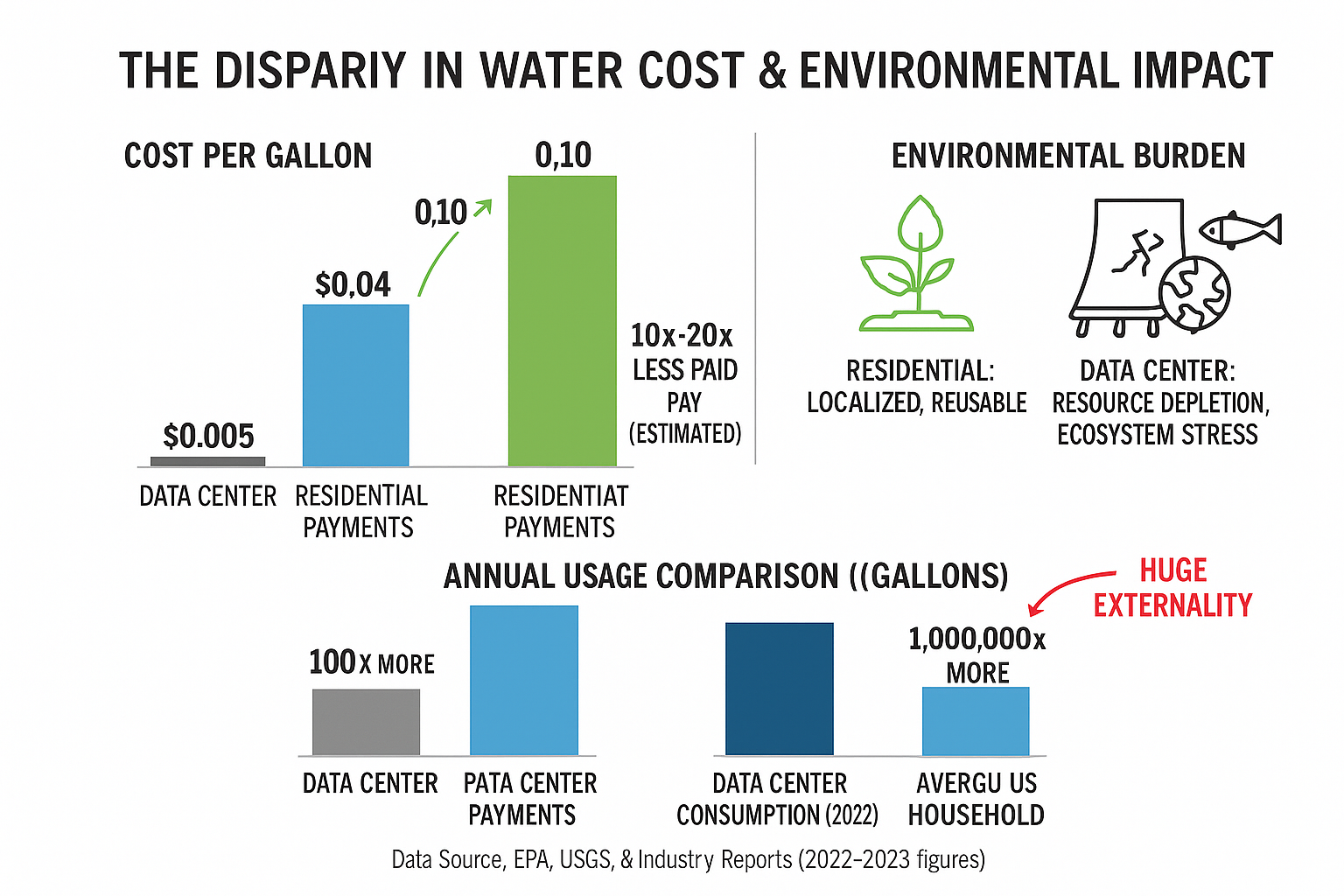
When a Google data center in Mesa, Arizona, was analyzed, the company had negotiated to pay $6.08 per 1,000 gallons while residential customers paid $10.80 per 1,000 gallons. This pricing disparity means everyday citizens subsidize corporate water consumption while paying premium rates themselves.
The True Cost of Data Center Water Usage: What Tech Giants Hide
Perhaps most revealing is what happens when companies actually calculate the real environmental cost of their water usage. When Microsoft assessed its water footprint at a data center in San Antonio, Texas, it discovered that the true cost of water was 11 times more than what the company was actually paying.
This massive gap between market price and environmental cost represents an enormous hidden subsidy from communities to corporations. While tech giants post record profits from AI services, local residents bear the environmental burden without compensation or even meaningful consultation.
The $1 Trillion Question: Who Should Pay for the AI Revolution?
Under current projections, investments in data centers in the U.S. are expected to surpass $1 trillion over the next five years. This represents an unprecedented build-out of digital infrastructure, driven largely by the AI boom and increasing demand for cloud computing services.
But this raises fundamental questions about equity and environmental justice:
- Should rural communities subsidize urban tech consumption? The residents of small Georgia towns didn’t ask for data centers, yet they’re paying through environmental degradation and higher utility bills so people in cities can enjoy faster AI responses and streaming services.
- Should corporations pay the true environmental cost? When companies pay a fraction of water’s real environmental value, they’re essentially receiving a hidden subsidy funded by community resources and future generations.
- Should there be democratic input on data center locations? Most data center developments happen with minimal community input, often approved through zoning variances and tax incentive packages negotiated behind closed doors.
In the Next Three Years: A Crisis Accelerating
Data center electricity use is expected to double or even triple in the next three years as AI adoption accelerates. This isn’t a problem that’s going away—it’s a crisis that’s intensifying with each passing month.
Without meaningful regulatory intervention, transparency requirements, and community protections, we’re likely to see:
- More rural communities facing water shortages and contamination
- Electricity bills rising across the country to support data center infrastructure
- Increased strain on aging power grids
- Greater water stress in already vulnerable regions
- Continued lack of accountability from tech giants
Reducing Data Center Water Consumption: Solutions and Paths Forward
The data center water crisis isn’t inevitable—it’s the result of policy choices and corporate priorities that can be changed:
Transparency Requirements: Tech companies should be required to publicly disclose their complete water footprint, including both direct and indirect consumption, with third-party verification.
True Cost Pricing: Corporations should pay rates that reflect water’s actual environmental and social value, not subsidized industrial rates that undercut residential customers.
Community Input Mandates: Local communities should have meaningful input and veto power over data center developments that will affect their water supplies and quality of life.
Water-Efficient Technology Investment: Companies should be required to invest in cutting-edge cooling technologies that minimize water consumption, such as air cooling or closed-loop systems.
Renewable Energy Requirements: Data centers should be required to source electricity from renewable sources that don’t add to the water burden through power generation.
Impact Compensation: When data centers do locate in communities, they should be required to compensate residents through direct payments, guaranteed employment, or infrastructure investments that offset the environmental burden.
Conclusion: The Hidden Price of Progress
The AI revolution is here, and it’s transforming everything from how we work to how we communicate. But progress shouldn’t come at the expense of vulnerable communities or our planet’s finite water resources.
Right now, tech giants like Meta, Amazon, and Google are externalizing the environmental costs of their operations onto rural communities that lack the political power to resist. Families in Georgia and across America are seeing their wells run dry, their electricity bills soar, and their peace shattered—all so corporations can maximize profits from AI services.

The question isn’t whether we should embrace AI and cloud computing—that ship has sailed. The question is who bears the cost and who reaps the benefits. Currently, that equation is grossly imbalanced, with corporations privatizing profits while socializing environmental damage.
As consumers, investors, and citizens, we have the power to demand better. We can push for transparency, support regulations that protect communities, and hold tech companies accountable for their true environmental footprint. The hidden water crisis created by data centers doesn’t have to remain hidden—and it doesn’t have to be accepted as the inevitable price of progress.
The true cost of the AI revolution is being paid right now by people like Beverly and Jeff Morris in Mansfield, Georgia. The question is whether the rest of us will continue to look away or demand that tech giants finally pay their fair share.